
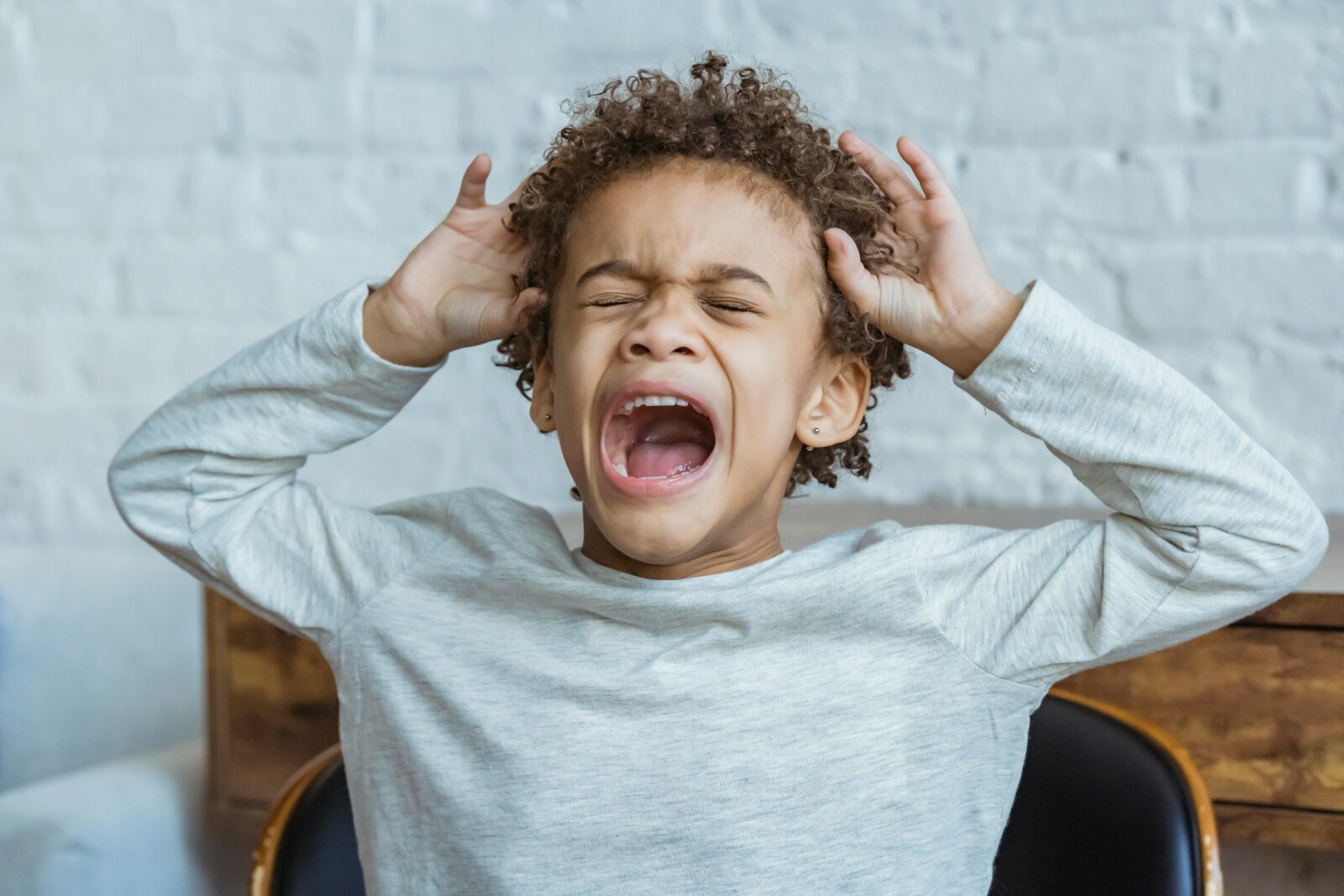
Most kids who act out aren’t choosing to be difficult. They’re responding to feeling incapable every single day.
If you’ve spent any time in a school lately — or talked to someone who has — you’ve probably heard some version of the same story. Kids are struggling. Behavior is worse. Teachers are overwhelmed. Administrators are scrambling. Everyone agrees there’s a problem. What they can’t quite agree on is why.
Social media gets blamed a lot. Screen time. The pandemic. Parenting styles. And look — none of those are nothing. But there’s a simpler explanation sitting right in the middle of the room that doesn’t get nearly enough attention: a significant number of children are acting out because they are failing academically, and nobody has connected those two dots for them. Or for us.
When School Feels Like a Place Where You Can’t Win
Here’s what the research actually says. A 2023 article in Educational Leadership makes a point that sounds obvious once you hear it: most problem behaviors are a way children adapt to — or avoid — challenging environments they cannot manage effectively on their own (Weinstein & Tsai, 2023). Read that again slowly. The behavior isn’t the disease. It’s a symptom. And the disease, very often, is a chronic academic struggle.
Think about what it feels like to sit in a room every day where you are consistently asked to do things you cannot do. Not things that are hard. Things that feel impossible. You don’t raise your hand because you don’t know the answer and you’ve learned that not knowing is embarrassing. You don’t ask for help because asking confirms what you already suspect about yourself. So you do what any reasonable human being does when trapped in an impossible situation: you find a way out. You act up. You check out. You pick a fight. You become, in the language of school reports, a behavior problem.
McEvoy and Welker (2000) put it plainly in their review of the research on antisocial behavior and school climate: academic failure and behavioral problems don’t just correlate — they tend to travel together and reinforce each other over time. Tremblay and colleagues (1992) followed children with early disruptive behavior and poor school achievement and found that those patterns didn’t fade with time. They compounded. Early academic struggle left unaddressed doesn’t stay contained to academics.
And Darney and colleagues (2013) found that children who showed both academic and behavioral problems as early as first grade faced measurably worse outcomes all the way through twelfth grade — not just in school performance, but in a range of life outcomes. First grade. That’s six years old. The window is not as wide as we’d like to believe.

The Cognitive Piece Everyone Is Missing
Weinstein and Tsai (2023) add a layer to this that’s particularly useful for parents trying to make sense of what they’re seeing. Post-pandemic data shows a notable increase in students struggling with executive functions — things like working memory, attention shifting, and the ability to regulate responses. Chronic stress weakens these skills. And weakened executive functions make academic work harder, which increases frustration, which increases the likelihood of behavioral responses to that frustration.
So the sequence looks something like this: a child experiences stress, their ability to regulate attention and manage frustration decreases, academic tasks become harder to navigate, the child feels increasingly incapable, and then they respond to that feeling the way human beings respond to feeling trapped — by fighting, fleeing, or freezing. We then call that child a behavior problem and treat the behavior, while the academic struggle that generated it continues quietly underneath.
It’s a little bit like noticing your car is making a terrible noise and responding by turning up the radio.
What Safety Actually Requires
Parents are pulling their children out of traditional school environments at increasing rates, and behavioral concerns are a significant driver of that decision. That’s understandable. Nobody wants their child in a place that feels unsafe. But it’s worth asking what makes a school environment actually safe — not just physically, but psychologically.
An emotionally safe school is not simply one where nobody gets pushed on the playground. It is one where children feel genuinely capable, where confusion is allowed, where asking for help isn’t a social risk, and where a child’s sense of worth isn’t tied to how quickly they can finish a worksheet. That kind of safety is harder to build than a security camera system, but it is also far more consequential. A school where children chronically fail is not an emotionally safe school, even if nothing overtly threatening ever happens there.
When a child spends years in a place where their effort doesn’t produce visible results, where they watch peers move ahead while they stay stuck, where confusion is a daily experience and asking for help feels risky — that child is under chronic stress. And as the research shows, chronic stress has measurable effects on the brain’s ability to learn, regulate, and cope (Weinstein & Tsai, 2023).
Self-Determination Theory tells us that human beings need three things to thrive: competence, autonomy, and connection (Deci & Ryan, 2000). A school that consistently produces experiences of incompetence — regardless of how kind the teachers are or how nice the building looks — is working against the conditions children need to be okay.
What We’re Building at Wayfinders
This is one of the reasons Wayfinders Academy exists. Not to criticize traditional schools, but to ask honestly: what does it actually take for a child to feel capable every day? What does it look like when a learning environment is designed around that question from the start?
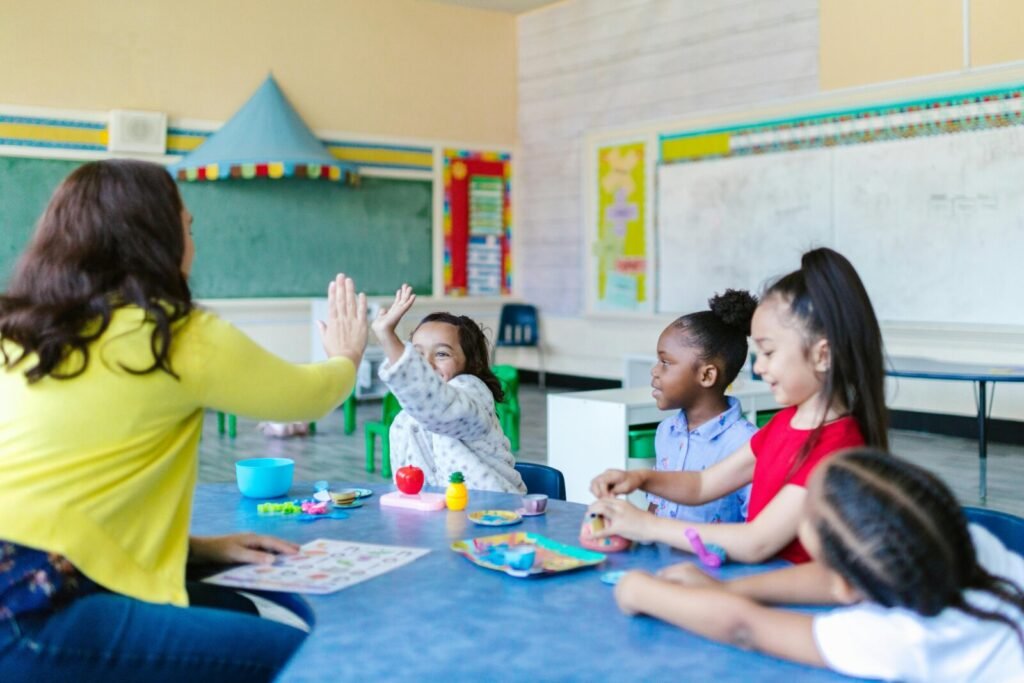
Wayfinders operates as a hybrid elementary and hybrid middle school — a model that blends structured, teacher-guided instruction with student-driven exploration and real-world application. That structure isn’t a scheduling quirk. It’s a deliberate response to what the research says children actually need: enough support to feel capable, enough autonomy to feel trusted, and enough flexibility to learn at a pace that produces genuine understanding rather than the appearance of it.
Mastery-based progression means a student doesn’t move forward until they genuinely understand — which means chronic confusion isn’t baked into the structure. Challenge-based learning means difficulty is matched to where a learner actually is, not where the curriculum schedule says they should be. And a genuine learning community, where students and families and educators know each other and trust each other, is not a nice-to-have. It’s one of the primary conditions under which children feel safe enough to take the risks that learning requires.
When children feel competent, they don’t need to escape. When they feel seen, they don’t need to act out to get attention. When the environment is structured to produce real growth rather than manage behavior, a lot of the behavior manages itself.
The Question Worth Asking
If your child is struggling behaviorally, the most useful question might not be “What is wrong with my child?” It might be “What is this behavior telling us about the environment?”
Because children are remarkably good communicators. They just don’t always use words.
Whether you are exploring a hybrid elementary option for a younger child or looking for a hybrid middle school that takes the emotional and academic experience of adolescents seriously, the question is the same: is this a place where my child will feel capable every single day?
At Wayfinders, we’re trying to build a place where the environment answers that question before the behavior has to.
References
Darney, D., Reinke, W. M., Herman, K. C., Stormont, M., & Ialongo, N. S. (2013). Children with co-occurring academic and behavior problems in first grade: Distal outcomes in twelfth grade. Journal of School Psychology, 51(1), 117–28.
Deci, E. L., & Ryan, R. M. (2000). The “what” and “why” of goal pursuits: Human needs and the self-determination of behavior. Psychological Inquiry, 11(4), 227–268.
McEvoy, A., & Welker, R. (2000). Antisocial behavior, academic failure, and school climate: A critical review. Journal of Emotional and Behavioral Disorders, 8(3), 130–140.
Tremblay, R. E., Masse, B., Perron, D., Leblanc, M., Schwartzman, A. E., & Ledingham, J. E. (1992). Early disruptive behavior, poor school achievement, delinquent behavior, and delinquent personality: Longitudinal analyses. Journal of Consulting and Clinical Psychology, 60(1), 64–72.
Weinstein, N., & Tsai, N. (2023). What’s behind the rise in problem behavior? It could be cognitive. Educational Leadership, 81(3).