
Our community life is designed to flex around the needs of real learners while keeping everyone grounded in a shared rhythm and a shared mission. Multi-age studios bring learners together across grade levels, building the kind of relationships and peer learning that same-age classrooms rarely produce. A student-facing platform captures daily choices, progress toward mastery, and the reflections that help every learner get better at learning and the adults get better at supporting student growth. A shared calendar and daily schedule give the community its heartbeat. And woven through all of it is the ongoing conversation between students, families, and educators that makes Wayfinders more than a school and makes every day more than just a day.
9:00 – 9:30
Set Sail
Morning gathering (Crew, socratic discussion ect.)
9:30 – 12:00
Open Waters
Core learning time with breaks included
12:00 – 12:45
Harbor Time
Lunch and PE
12:45 – 2:30
Voyage
Challenge-based learning
2:30 – 2:45
Tide keeping
Stewardship (accountability, next day choices, studio cleaning)
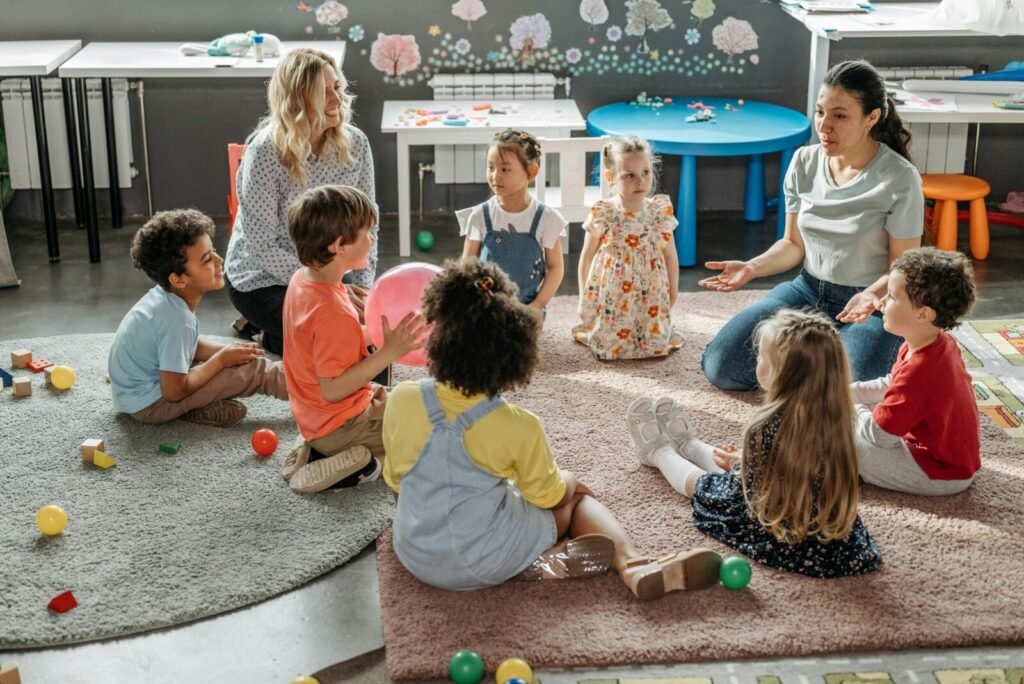
Imagine a classroom where no one is waiting for the rest of the class to catch up and no one is being left behind because the calendar moved on without them. That is what a Wayfinders studio is. Each studio is a mixed-age, mastery-based learning environment where students are grouped by skill development and ability to take active ownership of their own journey. They set goals, choose pathways, track their progress in My Learning Journey logs, and earn badges that mark real milestones along the way. Teachers provide the scaffolding each learner needs for knowledge acquisition, precisely when they need it, and gradually step back as fluency and readiness for independence grows. Advancement to the next studio is not a given. It is earned, through demonstrated mastery of the skills that make the next level of challenge genuinely within reach. In a Wayfinders studio, every learner is exactly where they need to be and always moving forward.

Every journey begins with a first step. Seekers are students taking theirs — curious, wide-eyed, and ready to explore. In this studio, learners build the foundational literacy and numeracy skills that will serve as the bedrock of every challenge they take on in the studios ahead. They learn to decode and encode language, read with growing independence and comprehension, express their ideas in writing, and develop a genuine sense of how numbers work. These are not just academic skills — they are the tools every Wayfinder needs to navigate what comes next. A Seeker who has mastered these foundations does not just move to the next studio. They arrive there ready.
No requirements for this studio.
Seekers ask questions. Explorers go looking for answers. In this studio, students take everything they built as Seekers — their literacy foundation, their number sense, their growing confidence — and put it to work on challenges that are bigger, more complex, and more interesting. They read texts that require them to think, not just decode. They write across multiple paragraphs with real planning and revision. They work with fractions, decimals, and multi-step problems that require genuine mathematical reasoning. And somewhere in the middle of all of that stretching and figuring out, something shifts. They stop wondering whether they can handle hard things. They start knowing it. Which is right about when the Voyagers studio starts looking very appealing. |
Voyagers are navigators in the truest sense. They have the tools, the foundation, and the growing confidence to chart their own course through complex and meaningful challenges. Building on the literacy and mathematical fluency developed in the Explorers studio, Voyagers take on texts and problems that demand more — more analysis, more reasoning, more creative application of what they know. Their writing becomes professional in nature, purposeful in intent, and increasingly sophisticated in form. Their mathematical thinking stretches across operations and number systems with the kind of fluency that makes complex problem solving feel less like a wall and more like a worthy challenge. And alongside all of that academic growth, Voyagers develop something the Mariners studio will ask of them directly — the initiative, the collaborative instinct, and the quiet confidence of a learner who knows they are ready for what comes next.
Learning is a deeply personal journey and at Wayfinders, we built a tool to honor that. My Learning Journey is our proprietary learning log, designed to give every student the scaffolding they need and the autonomy they are ready for. Each day, students choose from mission options connected to core standards and their current challenge projects, then select the learning pathways that is best for their learning that day like the following: Instruction with a guide, deep exploration with manipulatives, drilling with a buddy, a skill-building game, or a focused activity that builds exactly the skill they are working toward. At the end of the day, they reflect on how engaged they were, on how helpful the pathway was, and on any progress they made toward mastery. That reflection is where some of the most important learning happens. My Learning Journey also serves as the shared language of the Wayfinders community. Parents see their child’s choices and outcomes in real time and have meaningful conversations with their child. Educators use the data to refine pathways and celebrate strategies that are working. And students develop the most valuable skill a learner can have — the ability to honestly evaluate their own experience and use that knowledge to optimize and maximize tomorrow.
Select missions (based on standards)
Select pathways (instruction and learning activities)
Record accountability
Record evidence of mastery (at least 2)

See the missions and pathways their child or children chose each day
Hold meaningful conversations about child’s experience with the pathway that was chosen and its benefit (or lack thereof) in their progress.
Guide choices for the coming days and consider support for the days at home.
Record insights gained about pathway use and engagement.
See the data for the pathway selection and outcomes
Include in the end of day debrief discussion challenges and successes with pathways and how the students were using the activities to help their learning. Discusses ways to improve their practice or make different choices for the next day.
Consider pathway changes.
Consider pathway additions.
If you have questions, fill out this form and we will get back with you.