
Key indicators
Values without evidence are just words.
Our values have indicators. Our indicators have measures. Our measures drive everything.
There is a difference between an organization that lists its values and one that lives them — and that difference is measurable. Brené Brown’s research on organizational culture found that while most organizations can articulate their values, only about ten percent have done the work of defining what those values look like as observable behaviors, establishing concrete measures of progress, and building systems that hold the organization accountable to them every day. Without that work, values become aspirational language that gradually loses its meaning as daily decisions, resource allocation, and priorities quietly drift in other directions.
Wayfinders was built to close that gap. We have identified the specific indicators that tell us our core values are present in the life of our community — not assumed, but visible. We have created rubrics that let us assess those indicators honestly and consistently over time. And we are designing the organizational systems that align what we believe, what we build, and what we measure — so that our mission is not a document on a shelf but the actual architecture of how this school operates every single day. Our key indicators and measures are founded on empirical evidence.
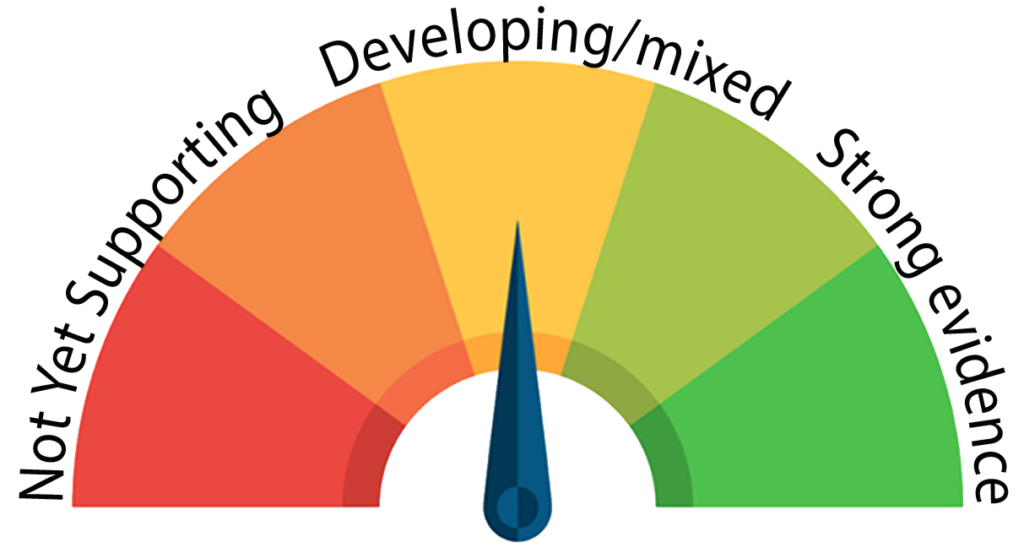
The rubric
What each value looks like, in practice.
Each core value, made observable — in what learners do, what educators design, what families reinforce, and the structures around them. Open a value to see the indicators (and the research behind them).
Value 1 — Follow the Inner Compass, Love of Learning
What learners are doing, saying and demonstrating
- Deeply absorbed in tasks; some appear to enter flow and lose track of time (Csikszentmihalyi, 1990)
- Remains engaged without adult proximity or prompting
- Continues working when teacher attention shifts elsewhere
- Persists through difficulty without seeking immediate rescue
- Returns to tasks after errors or confusion without adult redirection
- Treats difficulty as expected rather than threatening (Dweck, 2006)
- Asks ‘why,’ ‘how,’ and ‘what if’ questions unprompted
- Questions are generative, not just confirmatory
- Students pursue tangents or deeper questions beyond assigned scope
- Makes choices, revises work, and directs own next steps
- Can articulate what they are learning and why it matters
- Demonstrates initiative: ‘I want to try another way’
- Mistakes are treated as information and learning opportunities
- Revises work after errors without adult prompting
- Can explain what changed in their thinking after a mistake
- Explains thinking, strategies, and growth when asked
- Reflects without prompting at end of learning tasks
- Can describe how understanding changed over time
What educators design and how they respond
- Tasks emphasize meaning, thinking, and application over recall
- Open-ended problems with multiple valid paths are the norm
- Entry points are differentiated for different readiness levels (Tomlinson, 2015)
- Provides choice within clear structure; student voice shapes learning
- Delegates real decisions to students, not just cosmetic ones
- Facilitates rather than directs: ‘What do you notice?’ ‘What might you try?’
- Struggle is normalized and framed as part of learning
- Holds back from rescuing; tolerates productive uncertainty (Reeve, 2009)
- Uses specific process-focused feedback: ‘Tell me what you tried’
- Asks open-ended, reflective questions as primary discourse mode
- Questions invite elaboration, revision, and connection-making
- Talk time is predominantly student-driven (Reeve, 2006)
- Time is protected for deep, sustained engagement
- Transitions are minimized; long work blocks are observed
- Learning is framed as mastery-oriented, not time-bound
- Feedback is process-focused: strategies, effort, revision
- Person-focused praise (‘You’re so smart’) is avoided (Dweck, 2006)
- Students invited to explain corrections and revise thinking
What families do at home to support and extend love of learning
- Engages as a learning partner and coach, not a supervisor or answer-giver
- Asks: ‘What are you working on?’ ‘What are you thinking?’ rather than directing
- Reinforces school language and practices consistently at home
- Encourages persistence before stepping in: ‘This is hard — that’s part of learning’
- Allows productive struggle; waits for child to attempt strategies independently
- Normalizes difficulty as expected and worthwhile, not a sign of failure
- Uses process-, strategy-, and growth-focused language
- Praises effort and revision: ‘I noticed you tried three ways before you figured it out’
- Asks reflective questions: ‘What changed in your thinking?’ ‘What would you try next time?’
- Shares own questions, mistakes, and learning with the child
- Models that adults are also learners who struggle and revise
- Approaches unfamiliar challenges with visible curiosity, not anxiety
- Protects uninterrupted time for deep engagement
- Avoids rushing or multitasking during learning time
- Creates a home environment where learning can happen with sustained focus
Policies, structures, materials and physical space
- Materials invite exploration; multiple entry points visible
- Open-ended tasks are the norm; single-answer worksheets are rare
- Space supports sustained focus and movement without adult permission
- Long learning blocks (60–90 min) protected for deep engagement
- Transitions are infrequent and purposeful
- Schedule signals that depth is valued over speed (Csikszentmihalyi, 1990)
- Growth, reflection, and revision are valued in assessment
- Portfolio or mastery evidence visible; not just grades or test scores
- Students invited to explain and demonstrate thinking, not just recall
- Policies match stated mission: depth over pace, meaning over compliance
- Teacher autonomy in instructional design is protected
- Family engagement is structured and treated as essential, not optional
Value 2 — Chart Your Own Course, Power & Autonomy
What learners are doing, saying and demonstrating
- Regularly chooses tasks, strategies, order of work, or topics
- Can explain the reasoning behind choices made: ‘I chose this because…’
- Choices reflect genuine interests, not performance or approval-seeking (Deci & Ryan, 2000)
- Sets goals, plans next steps, and monitors own progress
- Can articulate where they are in their learning and what comes next
- Takes initiative to extend, revise, or deepen work without adult prompting
- Stays engaged and works through difficulty independently
- Returns to tasks after interruption without adult redirection
- Sustains attention over long work blocks without external management
- Notices errors and revises work using available materials or own reasoning
- Reflects on learning without prompting: ‘I figured out what I did wrong’
- Uses self-correcting materials or checks own work before seeking adult (Frierson, 2016)
- Teaches, supports peers, or takes ownership of aspects of learning
- ‘Power shifts’ visible: student acts as knower, explainer, or leader
- Takes on responsibilities that help others learn (Loizou & Charalambous, 2017)
What educators design and how they respond
- Invites student choices that meaningfully influence learning activities
- Follows through: student-stated preferences shape what actually happens
- Children state what they want to do → adults create the conditions for it (Loizou & Charalambous, 2017)
- Teaches planning, reflection, and decision-making skills, then steps back
- Scaffolds the process of choosing, not just the task
- Gradually releases control as student competence grows (Vygotsky, ZPD)
- Tolerates productive messiness; adjusts rather than reclaiming control
- Trusts students with uncertainty and stays curious about what emerges
- Views creative uncertainty as a condition of real learning, not a problem to fix
- Materials and tools support self-correction and independent work
- Students can access what they need without adult gatekeeping
- Environment is organized for student use, not teacher convenience (Montessori / Frierson, 2016)
- Views students as capable contributors and co-designers of learning
- Shares decision-making power in substantive, not merely symbolic ways
- Willing to be surprised by student choices and direction
What families do at home to build autonomy and follow through
- Invites child’s ideas, preferences, and reasoning in planning home learning
- Treats child as capable of making and owning decisions with support
- Asks: ‘What do you want to work on today?’ and builds the conditions for it to happen
- Encourages struggle and thinking before helping
- Waits for child to attempt strategies independently before offering support
- Uses prompts: ‘What have you tried?’ rather than providing answers
- Offers real choices within clear expectations and follows through
- Helps child plan, prepare for, and follow through on chosen commitments
- Protects the child’s right to experience the consequences of their choices
- Protects uninterrupted deep work time during home learning days
- Minimizes interruptions, corrections, and unsolicited praise during focus time
- Avoids hovering; creates conditions for autonomous concentration (Frierson, 2016)
- Discusses what worked, what was hard, and what comes next after learning
- Invites child to reflect: ‘What did you figure out today?’ ‘What would you change?’
- Reinforces school reflection practices with consistent language at home
Policies, schedules and structures that enable real autonomy
- Clear autonomy progression: scaffolded choice → independence (novice to advanced)
- Structures fade as competence grows; scaffolds are temporary supports, not permanent controls
- Moderate autonomy with supports — neither rigid control nor total freedom (Taub et al., 2020)
- Long work blocks and flexible pacing protect self-directed learning time
- Predictable cycles: choose → plan → do → reflect built into daily/weekly structure
- Students have protected time to ‘follow the thread’ of their own inquiry
- Planning, reflection, revision, and self-correction are documented alongside academics
- Mastery evidence includes autonomy competencies, not only test scores
- Choice + rationale logs, self-correction evidence, and contribution records in use (Loizou & Charalambous, 2017)
- Tools support independence and self-correction; students do not need adult mediation to learn
- Materials are labeled, accessible, and designed so students can detect and fix their own errors
- Norms protect concentration: long blocks, minimal interruption (Montessori / Frierson, 2016)
- Teachers are trusted designers; parents are partners with shared language and structures
- Adults at school and home share a ‘freedom within limits’ philosophy and vocabulary
- Parent-school coherence: weekly home autonomy evidence connects home and campus learning
Value 3 — Travel Together, Collaborative Community & Flourishing
What learners are doing, saying and demonstrating
- Many students share ideas and concerns in normal routines
- Students can point to decisions that changed because of their input (class norms, projects, activities)
- Perspectives are visible in discussion artifacts: notes, boards, shared reflections (Conner et al., 2024)
- Students help implement community decisions: roles, tasks, peer support
- Monitor how group agreements are going and propose adjustments
- Shared ownership is visible: ‘That’s our job to keep track of’
- Peer interactions show genuine cooperation and positive engagement
- Students persist in group work without constant adult supervision
- Students seek out peers for help before seeking adults (Deci & Ryan, 2000 — relatedness)
- Visible signs of joy, engagement, and genuine belonging
- Students appear to be thriving, not merely complying (Seligman, 2011 — PERMA)
- Positive relationships and sense of meaning are observable across the group
- Students demonstrate interest and commitment to learning they helped shape
- On-task behavior is sustained without external controls
- Students can explain why they care about what they are working on
What educators design and how they respond
- Explicitly teaches how to brainstorm options, evaluate tradeoffs, and decide
- Uses consensus or majority structures when appropriate; makes process transparent
- Students are taught how to decide well, not just asked for opinions (Perry-Hazan & Somech, 2023)
- Clear, predictable routines for student input: meetings, circles, reflection protocols, councils
- Both formal and informal daily participation opportunities present
- Students know when and how to share input and expect it to matter (Mitra, 2004)
- Treats decision-making power as shareable, not zero-sum
- Students are trusted as contributors, not managed as compliance risks
- Checks: who gets to speak? Who is heard? What happens next? (Conner et al., 2024)
- Visible ‘you said → we did’ feedback loop in place
- Follow-through on student input is observable and tracked
- Teacher checks: does input actually change anything, or is it for show? (Richter & Tjosvold, 1980)
- Attends to the well-being of individuals, not just task completion
- Proactively builds relationships and checks in on belonging and emotional state
- Wellness and social connection are embedded in daily routines, not add-ons (Seligman, 2011)
What families do at home and in partnership with the academy
- Regularly asks for child’s thinking, preferences, and reasoning in planning learning
- Child helps shape plans for home learning days
- Reinforces that participation includes responsibility, not just preference (Mager & Nowak, 2012)
- Helps child brainstorm options, evaluate choices, and reflect on outcomes
- Teaches how to choose well, not just what to choose
- Supports follow-through on child-made plans: revisit, adjust, recommit
- Shares observations from home learning days with the academy
- Participates in improvement conversations as a partner, not just a compliance checker
- Communicates proactively — not only when there is a problem (Conner et al., 2024)
- Reinforces that participation includes responsibility, not entitlement
- Respects shared community norms even when they require compromise
- Uses shared school language at home: choice, voice, follow-through, revision
- Creates home conditions for positive emotion, belonging, purpose, and well-being
- Supports the child’s social relationships and sense of meaning in learning
- Addresses emotional climate proactively; home is a place where child thrives (Seligman, 2011)
Policies, schedules and structures that make community real and flourishing possible
- Evidence of improved student–adult relationships and positive school ethos visible and tracked
- Participation structures are culturally and contextually responsive; not limited to one model
- Both formal (councils, class meetings) and informal (daily dialogue) structures are present
- School distinguishes genuine from token participation and audits practice quality
- Visible ‘you said → we did / we didn’t (and why)’ loop at the school level
- Equity safeguards in place: whose voices are present? Who is excluded? (Richter & Tjosvold, 1980)
- Physical space fosters collaboration: flexible seating, visible group work products, community displays
- Student-created and co-created artifacts visible in the environment
- Space communicates belonging and shared ownership, not compliance
- Wellness, nature and social connection are embedded in daily structures, not add-ons
- Positive emotion, strong relationships, meaning, and purpose are observable across the community
- Flourishing is named as a school value and tracked through observation and community reflection (Seligman, 2011)